The effect of Sadness on Visual Artistic Creativity in Non-Artists
{{brizy_dc_image_alt entityId=

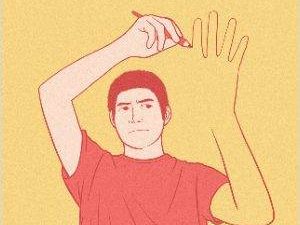
It is now online the final published version of the Article “The effect of Sadness on Visual Artistic Creativity in Non-Artists” by Massimiliano Palmero, Laura Piccardi, Marco Giancola, Raffaella Nori and Paola Guariglia published in Brain Sciences.

In the present study we investigated the effects of mood states on artistic creativity. Mood states were induced by instructing participants to listen to self-selected happy, sad, or neutral music for ten minutes. Then, all participants were asked to make two artistic drawings. To check for mood manipulation, the Profile of Mood States (POMS) was administered before and after listening to the self-selected music. After the mood induction, the negative group reported higher scores than the other two groups in the ‘depression’ subscale and lower scores than the other two groups in the ‘vigour’ subscale of the POMS; the positive mood group showed more vigour than the negative mood group. Yet, three independent judges assigned higher ratings of creativity and emotionality to the drawings produced by participants in the negative mood group than drawings produced by participants in the other two groups. These results confirmed that specific negative mood states (e.g., sadness) positively affect artistic creativity, probably because participants are more likely to engage in mood-repairing. Limitations and future research directions are presented.


More from the Blog

{{brizy_dc_image_alt entityId=
Malevolent Creativity and Cognitive Style: The Mind Behind Harmful Ideas
This article provides an in-depth analysis of the research published in Frontiers in Psychology by Pierpaolo Zivi and colleagues, titled "Field dependent-independent cognitive style as a predictor of malevolent creativity: a multifaceted approach". The study explores one of the most fascinating and unsettling aspects of the human mind: malevolent creativity, the ability to generate original ideas with the […]
{{brizy_dc_image_alt entityId=
Congenital lack and extraordinary ability in object and spatial imagery: An investigation on sub-types of aphantasia and hyperphantasia
It is now online the Article -Congenital lack and extraordinary ability in object and spatial imagery: An investigation on sub-types of aphantasia and hyperphantasia-  by Liana Palermo, Maddalena Boccia, Laura Piccardi and Raffaella Nori, published in Con...
{{brizy_dc_image_alt entityId=
The Contribution of Internal and External Factors to Human Spatial Navigation
The editorial "The Contribution of Internal and External Factors to Human Spatial Navigation" by Laura Piccardi, Raffaella Nori, Jose Manuel Cimadevilla, and Maria Kozhevnikov in Brain Sciences is now available online. Spatial navigation involves various cognitive processes such as memory, attention, spatial updating, mental planning, and problem-solving skills. Additionally, internal and external factors like age, […]
Scroll to Top